
“They came to be known as hard workers with a fierce streak of independence.”
Source: https://quehistoria.com/america/colombia/medellin/
After going from a town to a city in 1813, thanks to its great commercial and economic importance and its geographic location, Medellín began to see architecture, the arts and literature gain relevance.
Its true evolution began when it was named capital of the department in 1826.
In the first half of the 20th century, Medellín became a center of political and economic power, and the great entrepreneurial spirit of the city and its people came into full view.
Among the many stories Grandpa used to tell, his memory always held the Antioquia Railway station, the churches of La Candelaria and La Veracruz, the Vásquez and Carré buildings, and Berrío Park, from the days when he came down from northern Antioquia to buy a ticket to Cisneros, where his uncle Elías lived.
Other stories inspire us too, like those told by Elvira, a very intelligent woman ahead of her time who, against the odds, studied at the Normal School for Young Ladies in Medellín, crossing what is now San Juan Avenue to reach the cloister where she would be taught so many things to become a great homemaker.
We are inspired by Román Arroyave, a weaver at Fabricato; Hernán Herrera, a self-taught surveyor who helped develop Antioquia’s road infrastructure through rural roads and highway design; and Mario Lobo, PhD in genetics and physiology, who made a great contribution to Colombian society with the first variety of “Lulo La Selva,” obtained through domestication by interspecific hybridization, and by enriching the genetic base of the tree tomato (source: Agricultura y Ganadería).
We are also inspired by Guillermo Calle, physician and manager of Concaja; Margarita Guzmán, teacher; Hugo Arias, auditor at Empresas Públicas de Medellín; Antonio Quintero, chemical engineer and dean at UPB; Raúl Henao, honorable member of the National Police; Silvia Muñoz, translator; Wilson Castiblanco, mathematics teacher at the Instituto Popular de Cultura, now ITM (Instituto Tecnológico Metropolitano); Inés Mejía, a devoted mother; Luis Fernando Ochoa, businessman; and we continue to be inspired by everyone who has lived and lives at Reloj de Arena.
“I ask God not to take my memory away!” Those were Grandpa’s words. Today, this place, which cares with love, responsibility, humanity, quality and commitment for those whose memory has failed them, wants above all to preserve their memories: memories of their dignity, of who they were and will continue to be, of a city and a region they and their families traveled, full of history, emotion and tireless work.
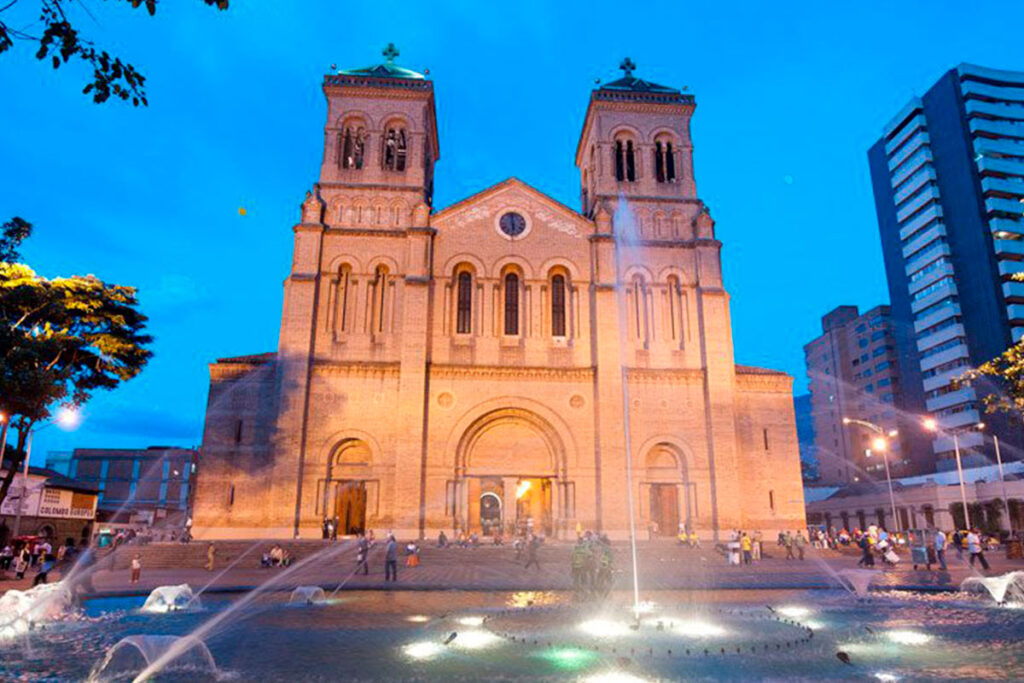
A place that evokes the Medellín of the 1960s, blending as many styles as people: that is Reloj de Arena. With all these echoes of the past, the photographs, the velvet furniture, the crystal lamps and the ever-present coffee remind them of the gatherings at the Málaga, Versalles and Astor cafés, a stroll along Junín, crossing Bolívar Park and finally arriving at the enormous neo-Romanesque Metropolitan Cathedral.
A Reloj de Arena that is not a nursing home for old folks, but a Reloj de Arena that rose the way the entrepreneurs of that era did: by sheer effort, hard work and dedication, striving to be the best and raising the flag high, like the Coltejer building, symbol of a thriving city.