
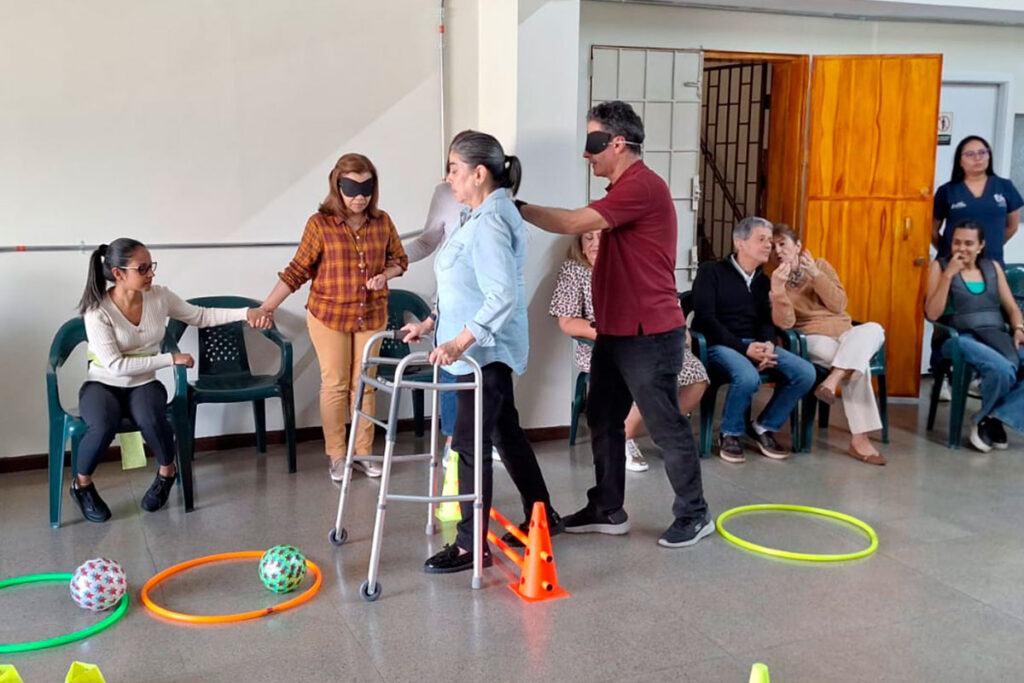
After many years of studying, observing and learning about the care of adults living with some form of dementia, usually associated with neurodegenerative diseases, we understand that we still face a major challenge as a society: a lack of knowledge, empathy and sensitivity around the subject. This ignorance has contributed to the stigma and exclusion of people with dementia, as if nothing more could be done for them.
The truth, however, is that the story of dementia begins up to twenty years before the first symptoms appear. Without realizing it, we build the path toward it through our everyday decisions, our unresolved emotions and our unhealthy habits. Sadly, we have not stopped to understand what happens in our brain throughout our lives. Even today, many people believe that going “crazy” is a normal part of old age. In reality, old age can be a successful, active stage of life, with good physical and mental health, as long as we have prepared for it throughout our lives. The key lies in our habits. While genetics accounts for around 10 to 15%, the other 85 to 90% depends on our choices. Genetics brings susceptibility, but lifestyle, environment, education level, trauma, chronic stress, nutrition, physical activity and non-communicable diseases carry equal or even greater weight.
The brain at the center of life
It is time to recognize that the brain, more than the heart or any other organ, is the engine of our lives. In Ancient Greece, people debated which organ was the most important. Today we know that the heart can be replaced by a transplant or an artificial device. The brain, on the other hand, remains irreplaceable. It is the most perfect machine ever created: capable of inventing other machines and of processing emotions, thoughts, language and memory. And yet, paradoxically, we still do not take care of it as it deserves.
Dementia as a public health challenge
In its Global status report on the public health response to dementia¹, the World Health Organization (WHO) warns that:
“In 2019, there were 55.2 million people living with dementia worldwide. This number is estimated to reach 78 million by 2030 and 139 million by 2050.”
What is driving this increase? The answer is clear: non-communicable diseases such as cardiovascular and chronic respiratory diseases and diabetes, among others. All of them are closely linked to factors such as poor diet, a sedentary lifestyle, alcohol use, smoking, drug use, environmental pollution and also the emotional aftermath of childhood trauma.
Awareness and prevention
Far from wanting to cause distress, my intention is to raise awareness. For example, when someone has a stroke2, the brain is affected immediately and, if it is not treated properly, this can trigger the onset of vascular dementia. Mayo Clinic has a very clear article on the subject on its website, which I recommend reading: “Stroke.”
The piggy bank of habits
To better understand this reality, let’s think of a piggy bank that we fill little by little.
Since childhood, we have been spoiled with food. We remember those traditional tables from Antioquia full of French fries, fried meats, sweets, beans cooked with lard, bread crumbled into hot milk, boiled milk with cream and arepas. Today, that tradition has turned into burgers, sodas, packaged plantain chips and double ice creams with whipped cream…
This is not about demonizing food, because food is also culture and memory, but about understanding that excess, a lack of vegetables and fruit, and years of physical inactivity eventually take their toll.
Unhealthy habits gradually clog our arteries, affecting circulation and brain function. As in the stroke example, many non-communicable diseases originate in our daily practices, and yes, we can do something to prevent them!
Are we doomed to develop dementia?
So, are we doomed to develop major neurocognitive disorder? The answer is no.
It depends on our attitude toward our physical and mental health. We need to start by reviewing our lifestyle and making small changes to our daily habits. Exercising our executive functions is also important: memory, reasoning, planning, organization, mental flexibility… According to neuroscience, these skills stimulate new neural connections, synapses and neurogenesis.
Education and cognitive reserve
Nor can we forget the role of education and our life journey. Childhood, youth, and academic and social development are key to building what is now called “cognitive reserve”: the network of learning and memories stored by the brain that can delay decline.
Memory and its warning signs
Memory, one of our most precious functions, is the process of recording, storing and recalling information. Memory loss is not always a warning sign. Forgetting where we left our keys is normal when we are distracted. We should be concerned, instead, when working, semantic, episodic or procedural memory begins to fail.
A call to action
There is still much to learn, but also much to teach.
It is time to act, to take care of ourselves and of others. We cannot wait for someone else to do it for us. Being aware, we have a responsibility to sow a culture of brain care, from self-care to prevention, from empathy to changing practices.
Caring is not enough. We must prevent.
References
- Global status report on the public health response to dementia. Available at: https://acortar.link/s8AenQ ↩︎
- Cardiovascular diseases. (n.d.). Who.int. Retrieved June 11, 2025, from https://acortar.link/yaZ4l8 ↩︎